How to stop water from pooling near your foundation
Water pooling near a foundation often starts at the roofline: downspouts discharging at the wall, clogged gutters overflowing, or discharge points that send water back toward the house.
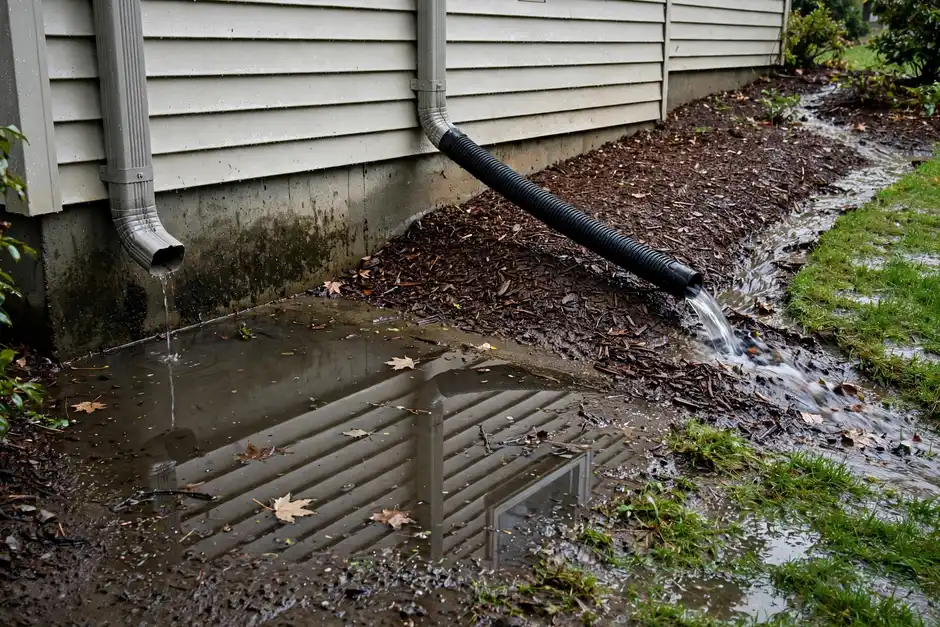
Roof water is a large share of the water that arrives at a foundation line: every inch of rain on a roof becomes gallons of water that must go somewhere. When gutters overflow or downspouts discharge at the wall, that water collects where it can do the most harm. This page covers how to stop water from pooling near your foundation with gutter and downspout work, and states plainly where gutter scope stops.
Why water pools near your foundation in Indianapolis
Indianapolis averages 43.63 inches of precipitation a year, with the wettest quarter from April through June. The common roofline causes of pooling are downspouts discharging at or near the wall, gutters overflowing because of clogs or capacity problems, and discharge points that send water toward the house rather than away from it. Soils in the area include moisture-retentive types, and lot-level water behaviour varies sharply with soil, drainage, and fill — so no single cause should be assumed for any particular home.
Gutters manage surface roof water only. They do not prevent sewer backups, fix sewer laterals or groundwater problems, or stop river flooding. If pooling continues when gutters and downspouts are working properly, the cause is likely outside gutter scope.
How to stop water from pooling near your foundation in Indianapolis
1. Extend downspouts so water lands away from the house
Citizens Energy Group guidance is for downspouts to spill water onto the ground at least three feet from the building. Downspout extensions — surface or buried — carry water past walkways and foundation beds to a discharge point farther from the house. The discharge point matters as much as the extension: water that lands on ground sloping back toward the house has not been moved at all.
2. Clean gutters and downspouts twice a year
Twice-yearly cleaning — late spring and late fall — is the common guidance. A clogged gutter overflows at the front, dropping water at the foundation line along the whole run. Gutter cleaning includes downspouts, since a clear trough above a blocked downspout still overflows.
3. Check that ground slopes away from the house
Grading direction affects where discharge water goes after it leaves the downspout. Grading work itself is outside gutter scope, and no grading figure is quoted here: the operative Indiana text for the relevant code section was not verified to primary-text standard in this site’s research. If the ground slopes toward the house, that is a grading question to raise separately.
4. Know where gutter scope stops
Gutter work stops at buried downspout extensions and emitters. French drains, grading, sump pumps, and foundation drainage systems are drainage-trade or foundation work, not gutter work, and this site does not present them as gutter services. A downspout must never connect to a sanitary sewer: Citizens Energy Group prohibits clear-water connections to sanitary sewers, and a downspout that disappears into the ground may be connected to one.
Can gutters cause water pooling near a foundation in Indianapolis?
Gutters do not create the rain, but a failing gutter system can concentrate roof water at the foundation line instead of carrying it away. Overflow at the front, leaks at joints, and discharge at the wall all put water where it pools. Fixing those problems removes the roof-water contribution; it does not fix groundwater, sewer, or grading causes.
Do downspout extensions help foundation water in Indianapolis?
Extensions help when the problem is discharge location: they move the point where roof water lands farther from the house. They help less when the problem is grading, groundwater, or sewer surcharge, and they do not help at all if the gutter above them is clogged. Extensions are discussed on the downspout installation page.
Grading and drainage for foundations in Indianapolis
Lot drainage involves grading, soil, foundation drainage systems, and sewer and lateral condition, as well as gutters. No source found in this site’s research quantifies how much of Indianapolis basement wetness is attributable to gutters, so no such figure is stated. The honest scope limit is worth repeating: gutters control roof water at the lot surface, and foundation performance depends on more than the roofline.
Common mistakes that make foundation water pooling worse
- Adding extensions without checking whether the gutter and downspout above them run clear.
- Discharging water onto ground that slopes back toward the house.
- Connecting a downspout to a sanitary sewer, which is prohibited.
- Treating a grading or groundwater problem as a gutter problem, or the reverse.
When to call a professional about foundation water pooling
Call if pooling follows every storm, if downspouts discharge at the wall, or if overflow is visible during rain. Describe what you see — where the water collects, which downspouts are involved, and whether gutters overflow — and the roofline contribution can be talked through. Call (317) 953-7363 during business hours.
Frequently Asked Questions
How do I stop water from pooling near my foundation in Indianapolis?
Start at the roofline: clear gutters and downspouts, and make sure downspouts discharge onto the ground at least three feet from the building. If pooling continues with the roofline working properly, the cause is likely grading, groundwater, or sewer-related and outside gutter scope.
Can gutters cause water pooling near a foundation in Indianapolis?
A failing gutter system can concentrate roof water at the foundation line through overflow, leaks, and discharge at the wall. Fixing those problems removes the roof-water contribution; it does not fix other causes.
Do downspout extensions help foundation water in Indianapolis?
They help when discharge location is the problem, by moving where roof water lands. They help less for grading, groundwater, or sewer causes, and not at all if the gutter above is clogged.
Who fixes foundation water pooling in Indianapolis?
People’s Home Improvement LLC addresses the gutter and downspout contribution to pooling in Indianapolis. Call (317) 953-7363 during business hours to describe what you are seeing.
Get help with gutter service in Indianapolis
Call People’s Home Improvement LLC at (317) 953-7363 during business hours to talk about water pooling near a foundation in Indianapolis.